INSIGHTS:
These essays explore how identity, confidence, and behavior are shaped through recognition in everyday life.
Small moments such as clothing, reflection, environment, posture, and interaction can rapidly shift how natural or aligned someone feels.
The pieces below are part of Recognition Theory, a developing framework examining self-recognition, perception, and how experience becomes integrated into identity.
Reader Reflections:
“Sometimes exhaustion doesn’t come from work alone. It comes from carrying an old version of ourselves that no longer fits who we’re becoming.”
— The Forge Society
“You articulated the psychological friction that happens when we try to force a version of ourselves that we don’t fully recognize.”
— Reader reflection

Why We Continue Living From Versions of Ourselves That No Longer Exist
Website Excerpt
Most of us assume our identity naturally updates as we grow. Yet many people continue seeing themselves through beliefs that were formed years earlier. This article explores why self-perception often lags behind experience, how outdated identities continue shaping present-day decisions, and why the person holding the most outdated view of you may sometimes be you.
Have you ever noticed that your life can change dramatically while the way you think about yourself remains largely the same?
Over time, most of us gain experience, overcome challenges, develop new skills, and accomplish things we once thought were beyond our reach. We build careers, recover from setbacks, form new relationships, and navigate experiences that fundamentally change us. Yet despite all this growth, many people continue to carry around a version of themselves that was formed years earlier.
The successful executive still feels like the insecure young employee trying to prove she belongs. The accomplished professional still sees himself as the student who doubted his abilities. Someone who has lost a significant amount of weight may still see a heavier version of themselves in the mirror. Even people who have spent years building confidence often find themselves feeling like their younger, less certain selves in familiar situations.
These examples may seem unrelated, but they point to the same phenomenon: our lives often change faster than our identities.
We tend to assume that our self-image naturally updates as we grow and develop. If we become more capable, we assume we will feel more capable. If we become more confident, we assume we will see ourselves as confident.
In reality, self-perception often lags behind experience.
At various points in life, we develop conclusions about who we are. We decide that we are shy, outgoing, creative, practical, intelligent, average, confident, or insecure. Those conclusions are shaped by experiences, feedback from others, successes and failures, and the environments in which we spend our time.
The problem is that once these beliefs become part of our identity, we rarely stop to reexamine them. We continue carrying them forward even when our circumstances, abilities, and behavior have changed significantly.
As a result, many people spend years responding to information that is no longer current. The child who was frequently criticized may continue doubting herself long into adulthood. The employee who struggled early in his career may continue underestimating his abilities despite years of professional success. Someone who experienced rejection years ago may continue expecting rejection even after becoming valued and respected.
What is interesting is that these people are not necessarily seeing themselves incorrectly. They are seeing themselves historically. Their self-image is based on information that may have been accurate at one point in time but no longer reflects who they have become.
The challenge is that identity does not automatically update when our lives change. We often continue recognizing ourselves as the person we were long after our behavior, abilities, and experiences have changed.
In many cases, the version of ourselves that feels most real is not the most current version. It is simply the version we have known the longest.
The problem is that outdated identities do not simply affect how we think about ourselves. They influence the decisions we make.
A person who still sees themselves as inexperienced may hesitate to pursue opportunities they are fully qualified for. Someone who continues identifying with old insecurities may seek reassurance they no longer need. A person who still thinks of themselves as "not creative," "not leadership material," or "not the type of person who does that" may never test whether those conclusions are still true.
What makes this particularly difficult to recognize is that these identities often feel reasonable. After all, they are based on real experiences. The shy child existed. The struggling employee existed. The insecure teenager existed.
The problem is that many people continue consulting those versions of themselves long after they have stopped being accurate.
Imagine relying on a ten-year-old photograph to determine what you look like today. Most of us would immediately recognize the flaw in that approach. Yet many of us do something remarkably similar with our identities. We continue making present-day decisions based on outdated information, assuming it is current.
One of the most overlooked questions in personal growth may be this: What if the obstacle is not who you are? What if the obstacle is who you think you are?
Many people work hard to change their circumstances while continuing to operate from the same self-concept. They pursue new opportunities while carrying old assumptions. They achieve goals while maintaining outdated definitions of themselves. They become someone new while continuing to relate to themselves as someone old.
This matters because identity influences behavior. If I still see myself as not leadership material, I may avoid opportunities to lead. If I continue believing I am not creative, I may never pursue ideas that challenge that assumption. If I still define myself by old insecurities, I may make decisions based on limitations that no longer exist.
The challenge is that familiar identities often feel true. Not because they are accurate, but because they are familiar. The versions of ourselves we have known the longest are often the ones we trust the most.
Perhaps this is one reason major life transitions can feel so disorienting. A promotion, a divorce, retirement, a move to a new city, or a significant accomplishment does more than change our circumstances. It challenges the story we have been telling ourselves about who we are.
The more I think about it, the more I wonder whether self-discovery is often less about finding ourselves and more about updating ourselves.
Instead of asking only, "Who am I?" perhaps we should also ask, "Am I still operating from a version of myself that no longer exists?"
Many of us spend years trying to change our lives without realizing that the picture guiding those changes may be years out of date.
We assume we are responding to reality.
Sometimes we are responding to an identity that no longer exists.
And sometimes the person holding the most outdated view of you is you.
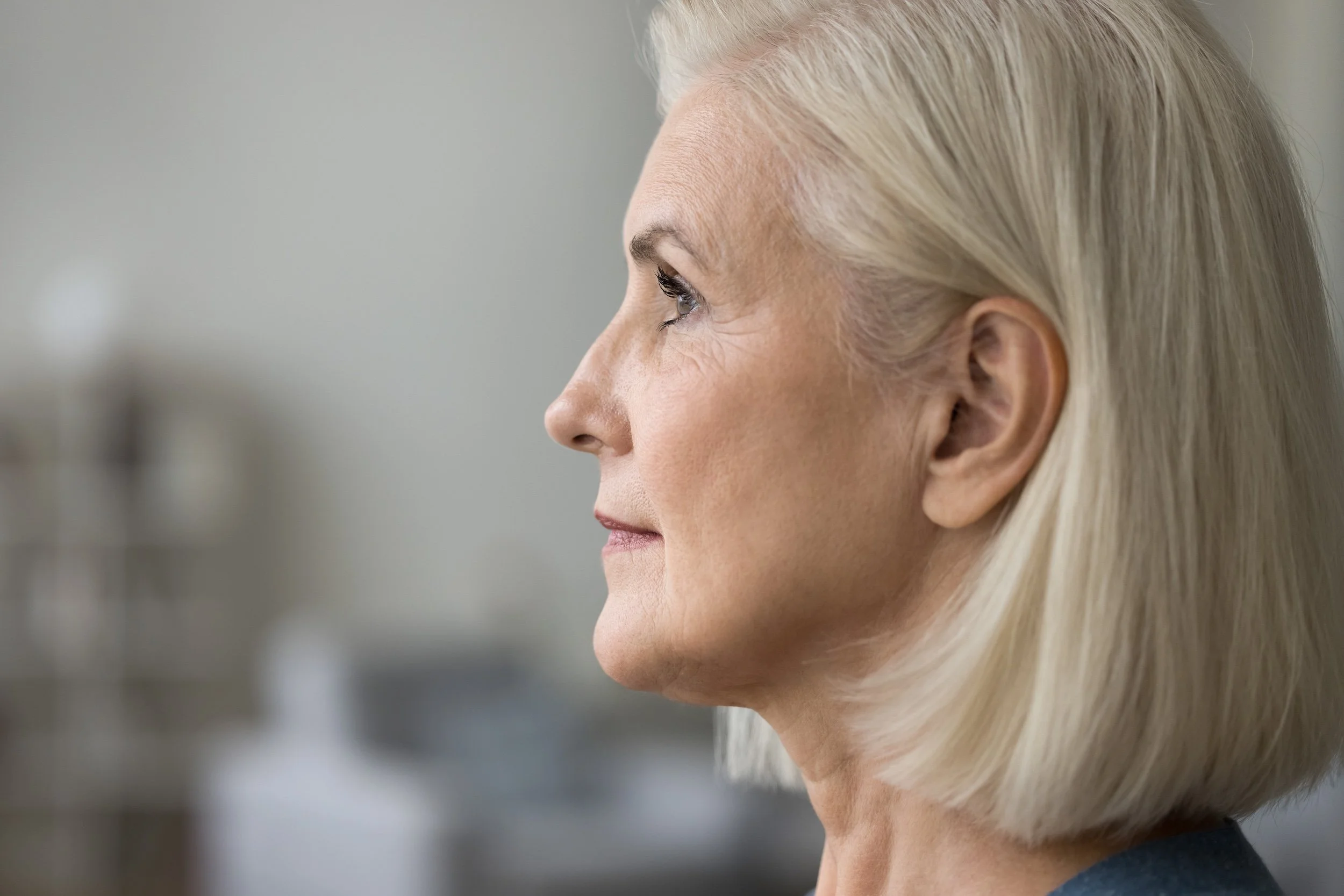
When the Most Important Mirror in Your Life Disappears!
Most conversations about loss focus on grief. Less attention is given to what happens to identity when the person who reflected us back to ourselves is no longer there. Over time, spouses, partners, family members, and close friends become important mirrors in our lives, reinforcing how we see ourselves and who we believe we are. This article explores the psychological role of recognition, why the loss of a significant relationship can feel like an identity disruption, and how people can continue developing a sense of self after one of life's most profound transitions.
How the people we love continue shaping who we are becoming, even after they are gone
There is something about losing a spouse that I have struggled to explain.
I have experienced the loss of family members and friends throughout my life, and while each loss was painful, it felt different. Their memory stayed with me. I could think about them, miss them, and remember them.
But when I lost my husband, something felt fundamentally different.
It took me a while to understand why.
Eventually, I realized that it had less to do with grief itself and more to do with the role he played in my life.
Over time, a spouse often becomes one of the most important mirrors we have.
Not because they reflect our appearance.
Because they reflect our identity.
They remind us who we are, what we value, what we are capable of, and sometimes who we can still become.
Most of us think of identity as something we build on our own.
The older I get, the less certain I am that this is true.
I think parts of who we become are shaped through the people we repeatedly experience life with.
Their opinions matter.
Their encouragement matters.
The way they see us matters.
Over time, those experiences become part of us.
That is especially true in a long marriage.
You do not simply spend years beside someone. You build thousands of shared reference points. You know what will make them laugh. You know what will frustrate them. You know what they would say about a situation before they even say it.
You know how they would react to good news, bad news, and everything in between.
You know which stories they have told a hundred times and will somehow find a way to tell again. You stop needing complete sentences. Sometimes half a look communicates an entire conversation.
After enough years, you stop experiencing life completely as an individual. Much of life is experienced through a partnership. The partnership becomes so familiar that you hardly notice it.
Until one day it is gone.
What surprised me was not the grief itself.
Everyone expects grief.
What surprised me was how often I still experienced life with him.
I would see something funny and immediately think about telling him.
I would hear a piece of news and know exactly what his reaction would have been.
Sometimes I would find myself mentally having a conversation with him before remembering that I could no longer call.
For a while, these moments felt like reminders of loss.
Now I see them differently.
I think they reveal something important about what happens when we deeply love another person. The people closest to us do more than create memories.
They help shape the person we become.
That is why losing a spouse can feel like more than losing a person.
It can feel like losing a witness to your life.
Someone who knew your history, your strengths, your flaws, your dreams, and the countless moments that never made it into anyone else's memory.
But I think there is something else happening as well.
When a spouse dies, we are not only grieving their absence.
We are adjusting to the absence of a familiar source of recognition.
Throughout life, we learn who we are partly through the way others respond to us. We see ourselves through their observations, encouragement, understanding, and belief in us.
A spouse often becomes one of the strongest sources of that recognition.
They recognize strengths we overlook. They remind us who we are when we lose confidence. They often see possibilities in us before we see them ourselves.
After years together, their recognition becomes woven into our own self-perception.
When they are gone, part of the disorientation comes from losing the person who reflected so much of us back to ourselves. For a period of time, it can feel as though part of your identity disappeared with them.
The routines change.
The conversations disappear.
The future you imagined together no longer exists in the same form.
You find yourself asking questions you never expected to ask.
Who am I now?
What does my future look like?
How do I move forward without the person who stood beside me for so many years?
These are difficult questions.
But over time, I began to realize something that surprised me.
The mirror was gone.
But the recognition was not.
I still know what my husband would say in many situations. And have laughed out loud to myself many times, just thinking about many incidents.
I know when he would tell me I am worrying too much.
I know when he would encourage me to take a chance.
I know when he would remind me to stop doubting myself.
And if I am being honest, I also know the situations where he would tell me I am making things far more complicated than they need to be, to calm down, and stop the drama!
Sometimes I can hear the entire speech before it even starts.
I know how proud he would be of things I have accomplished since he died.
Not because I am creating an imaginary version of him.
Because I knew him.
I knew his values, his beliefs, and the way he saw me.
The more I thought about this, the more I wondered whether healing is sometimes misunderstood. Many people assume healing means learning how to move forward without the person.
I am no longer sure that is the goal.
Maybe healing is learning how to move forward with what they gave us.
The people we love most do not stop shaping us when they are gone. If they helped shape part of who we became, they can continue to influence who we are becoming.
Not through memory alone.
Through the confidence they gave us.
The values they taught us.
The perspective they shared.
The belief they had in us when we could not always see it ourselves.
Perhaps that is one reason the loss of a spouse feels so different.
You are not simply carrying memories.
You are carrying part of the person you became through loving them.
Maybe the next version of yourself is created, in part, by remembering what they saw in you all along. Because the people who love us deeply often recognize things in us long before we fully recognize them ourselves.
And perhaps one of the most meaningful ways to honor that love is not simply to remember the person.
It is to continue becoming the person they always believed we could be.